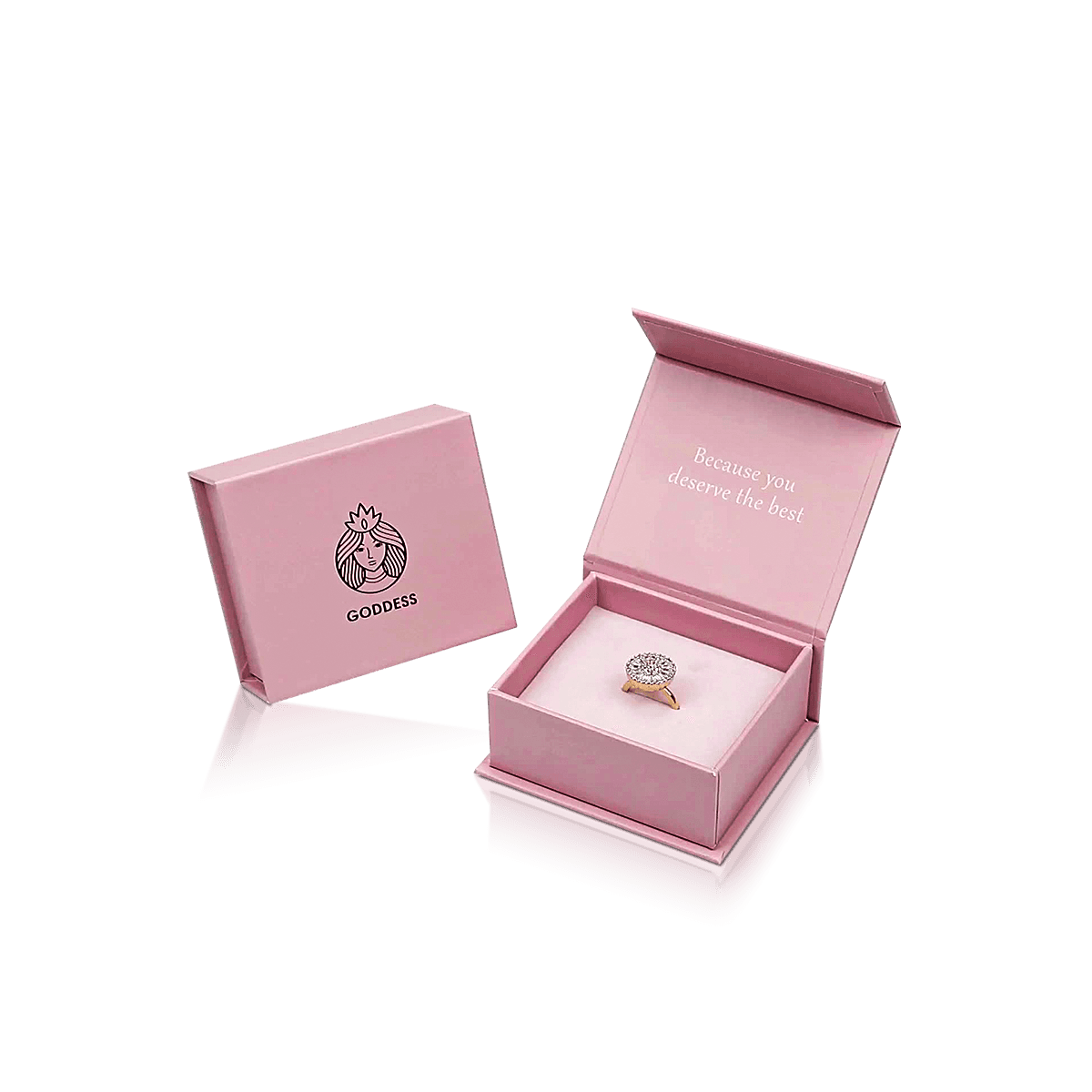
Custom Ring Boxes
Ring packaging shaped around band width, stone height and presentation, with secure inserts that keep every ring centred from display to delivery.
Free Design Support
Clear Pricing
Flexible Quantities
Unlimited Customization
Premium Materials
Offset Precision
Free Shipping
Quick Turnaround
Custom Ring Boxes That Hold the Ring at the Right Angle
Custom Ring Boxes should secure the band without pressing against the setting, stone or decorative shoulders. The box also needs enough lid clearance for the ring to sit upright. These details matter for fine jewellery, engagement rings, wedding bands, signet rings and fashion pieces with raised stones.
A ring can look off-centre even when it has not moved far. A loose slot may let the band lean forward. A shallow lid may touch a high crown. An insert that grips too tightly can make the customer pull at the ring. Good Custom Ring Boxes control each of these small issues while keeping the reveal simple.
The wider Custom Jewellery and Accessories Packaging collection can share colours and print rules, but ring packaging needs its own sizing and insert decisions.
The slot should grip the band
The insert should hold the lower part of the band. It should not place pressure on claws, pavé shoulders or a large setting. Slot width and tension depend on the ring profile, not only the nominal ring size.
Thin bands may need a narrower cut or softer support. Wide bands and signet rings need more room. Open rings and unusual shapes may need a small recess rather than a straight slot.
Lid depth must clear the setting
Measure from the lowest point of the band to the highest point of the stone or setting. Add safe space above it. The lining, insert angle and lid construction can reduce usable depth, so the outer height alone does not confirm the fit.
This check is vital for solitaire, halo, cluster and cathedral settings. It also matters when the ring leans back on a sloped insert.
Choose an Opening That Suits the Reveal
The opening action changes how the ring is seen. It also affects packing speed, shelf use and the amount of print space available. Custom Ring Boxes should open smoothly without letting the lid wobble, lift unevenly or hide the piece.
Hinged boxes for proposals and gifting
A hinged lid creates a direct reveal. It suits engagement rings, wedding rings and higher-value gifts because the customer can hold the box in one hand while opening it.
The hinge needs the right resistance. A loose hinge can drop back. A stiff hinge can jerk the ring forward. The insert angle should place the stone in view as soon as the lid opens.
Two-piece boxes for classic presentation
A separate lid and base gives a clean, familiar look. It can suit boutiques that want a neat box for counter handover, gift wrapping or placement inside a shopping bag.
The lid should lift without sticking, yet stay secure during handling. A shoulder or neck can add alignment and create a colour break around the opening.
Many high-value ring designs use structures found within Custom Rigid Boxes. The right choice depends on the ring value, gift use and space available at the retail counter.
Inserts Decide Whether the Ring Stays Centred
The insert does more than protect the ring. It sets the display angle, keeps the piece centred and controls how easily it can be removed. Custom Ring Boxes need an insert that works after repeated opening, not only when first assembled.
Soft support without excess pressure
Foam, covered card and shaped paperboard can all support rings. The best material depends on the ring weight, finish and brand look.
A soft surface can reduce rubbing, but it should not shed fibres onto the jewellery. A paper-led insert can create a clean, low-bulk result. Dense foam can hold a precise cut but needs the correct compression.
Finger space for easy removal
Customers and retail staff should be able to lift the ring without touching the stone. A small recess beside the band can improve access. The slot should release the ring with light pressure rather than a hard pull.
This is especially useful for thicker bands and rings with wide shoulders. It also reduces the risk of the insert lifting out with the ring.
The specialists behind Custom Inserts and Dividers can align the slot, finger space and cavity depth with the outer box.
Size the Box from the Complete Ring Profile
Standard dimensions can be a starting point, but they should not replace product measurements. Custom Ring Boxes need to account for the complete shape of the ring as it will sit in the insert.
Record the dimensions that affect fit
Useful measurements include:
- Band width and thickness
- Overall ring diameter
- Setting or stone height
- Width across the shoulders
- Maximum width of a signet face or cluster
- Space needed for one ring or two
- Planned display angle
Photos from the front, side and top help show details that numbers may miss. A simple reference image of the preferred opening can also prevent misunderstandings.
Allow for high and uneven settings
A tall solitaire may need more lid height than a broad signet ring. An asymmetrical piece may need an insert that stops the heaviest side from turning down.
Custom Ring Boxes for handmade or limited pieces can share an outer size when the insert safely handles each profile. However, forcing very different rings into one slot can weaken the presentation.
Check the dieline before artwork begins
The dieline sets the lid area, side panels, folds and safe print zones. Logo size should be checked on the final box footprint, not on a large screen.
The Dieline Tool can support initial dimensions and artwork setup. A custom dieline may still be needed for a rigid structure or fitted ring insert.
Make a Small Lid Area Look Deliberate
Ring boxes have limited print space. Large logos, long taglines and several finishes can make the lid feel crowded. Strong Custom Ring Boxes use scale, spacing and one clear visual focus.
Keep the logo readable at final size
Print the logo at the true lid size before approval. Fine lines can close up. Small reversed text can lose clarity. Foil may need thicker strokes than standard ink.
Centre placement works well for many square boxes. An offset logo can also feel refined when the spacing is intentional. Side panels or the inside lid can carry details that do not fit on top.
Choose finishes that suit handling
Foil can highlight a name or monogram. Embossing adds depth without another colour. Matte lamination can soften glare. A smooth uncoated wrap can suit a more natural look.
Ring boxes are handled closely, so fingerprints and surface marks matter. Very dark soft-touch finishes can show oils more easily than some textured or lighter surfaces.
Use the inside lid with restraint
A short message, maker’s mark or proposal phrase can sit inside the lid. Keep the text brief so it does not compete with the ring.
Colour contrast behind the product also matters. White metal can stand out against deep grey, navy or muted colour. Dark rings may need a pale insert. The choices on Customisation can be matched to the board, wrap, print process and insert surface.
Match the Details to Retail, Proposals and Delivery
Custom Ring Boxes may serve more than one moment. The same box can move from stockroom to counter, then into a gift bag or shipping carton. Each step adds a different need.
Retail boxes need quick handling
Staff should be able to open, close and restock the box without fighting the insert. The base should sit flat. The lid should align with little effort. Barcodes or item labels need a planned position away from the main branding.
Proposal boxes need a clear first view
A proposal box should feel easy to hold and open. The ring should face forward. The lid should stay open at a useful angle. Large outer dimensions can make the box harder to conceal or carry.
Compact does not mean cramped. The insert still needs space around the setting, while the hinge and lid need enough structure to feel secure.
Online orders need an outer layer
A ring presentation box is not a courier carton. It usually needs a small corrugated outer box or mailer that protects corners, closure alignment and surface finishes.
Void fill should stop the inner box moving without pressing on the lid. A simple shake check can reveal movement before a full order goes out.
Keep the Collection Consistent Without Too Many Sizes
A growing jewellery brand may sell thin bands, statement rings and matched sets. Creating a new outer box for every item can add needless stock and make packing harder.
Share outer sizes where the fit remains safe
One small box may cover several single rings with insert changes. A second, deeper size may cover high settings or two-ring sets. This keeps Custom Ring Boxes visually consistent while giving each ring enough room.
The insert should be the reason sizes can be shared. Empty space alone does not create flexibility.
Separate product tiers through detail
Core rings may use a printed two-piece box. Engagement pieces may use a hinged rigid box. Limited designs may add foil, a special inside colour or a seasonal sleeve.
The logo, main colour and proportions can stay linked across all tiers. Brands that also use Custom Necklace Boxes and Custom Earring Boxes can keep the same visual system while changing the proportions and insert.
Order Around Ring Types and Launch Timing
MOQ starts from 50, while Custom Packly can also support larger production runs, repeat orders and high-volume needs. The first quantity should reflect how many rings use the same outer box, insert and artwork.
A launch with five ring designs may only need two box sizes. A bridal collection may need one single-ring insert and one paired-band insert. Listing the quantity by box and insert type creates a clearer quote than listing only the total number of rings.
Keep approved details for reorders, including:
- Outer dimensions
- Insert cut and display angle
- Board or rigid wrap
- Print colours
- Foil or embossing position
- Inside-lid artwork
- Label area
- Outer shipping carton
This reduces colour and fit drift when new stock sits beside boxes from an earlier run.
Send Ring Details That Shape the Quote
An accurate quote for Custom Ring Boxes starts with the ring profile and intended use. Send:
- Ring type and product photos
- Band width, ring diameter and setting height
- Single-ring or paired-band layout
- Preferred opening style
- Insert material or visual reference
- Quantity by box and insert version
- Print colours and finish ideas
- Retail, proposal, gifting or online use
- Artwork status and required date
Custom Packly can review the details and suggest where one outer box can cover several rings safely. You can Get a Quote before every choice is final, as long as the ring measurements and planned quantity are clear.
FAQs
Related Industries
Related Packaging Styles
How it works
Simple steps from idea to delivery
Tell Us Your Specs
Tell Us Your Specs
Provide size, quantity, printing, and finishes.
Get a Fast Quote

Get a Fast Quote
Instant transparent pricing, no hidden fees.
Design and Approval

Design and Approval
Artwork checks, revisions, and final sign-off.
Produce

Produce
Expert manufacturing to meet deadlines.
Ship to Your Door

Ship to Your Door
Hassle-free, flexible delivery options.
Start Your Custom Packaging Quote
Share your product details, dimensions, quantity and artwork needs. We’ll help choose the right packaging style and send a clear quote.