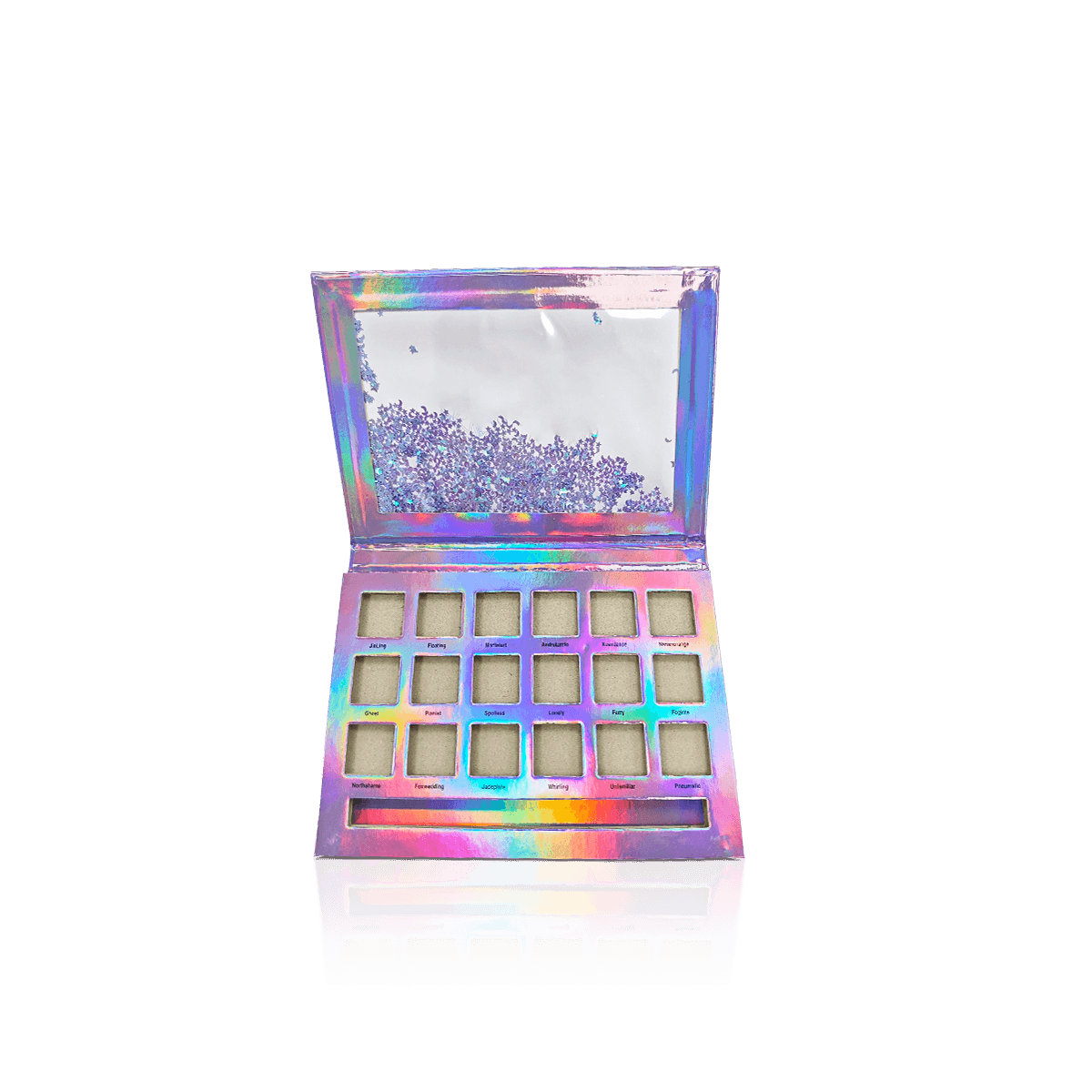
Custom Eyeshadow Boxes
Protect delicate pressed powders and present every colour story clearly with cartons planned around compact depth, palette layout, retail display and careful delivery.
Free Design Support
Clear Pricing
Flexible Quantities
Unlimited Customization
Premium Materials
Offset Precision
Free Shipping
Quick Turnaround
Pressed Powder Changes the Protection Brief
Custom Eyeshadow Boxes need to protect more than the outer compact. Pressed powder can crack when impact travels through the primary container, while loose pigment may collect around the hinge, mirror or lid when the palette moves during delivery.
Eyeshadow also creates a different retail task from lipstick or mascara. One collection may include single shadows, quads, slim palettes and larger presentation cases. Each item can have a different depth, closure and hinge even when the front dimensions look similar.
The carton should reduce movement, keep decorative surfaces presentable and provide enough space for the palette name, shade details, ingredients, barcode and required product information.
Within Custom Beauty Packaging, eyeshadow needs particular attention because internal powder damage may remain hidden until the customer opens the product.
Measure the Complete Compact
Custom Eyeshadow Boxes should be sized from the finished closed compact or palette, not only the pans or the stated product weight.
Include the Hinge and Clasp
Measure the length, width and depth at the widest points. Include raised hinges, clasps, curved lids, decorative plates and any feet beneath the compact.
The hinge should not press against a carton wall. Repeated contact can mark the box and transfer pressure into the compact during storage or delivery.
Leave enough clearance for clean loading without creating space for the palette to slide or rotate.
Count Every Internal Component
A mirror guard, applicator, shade card or protective film can change the required height. Measure the item exactly as it will enter the carton.
Small additions matter when the carton sits closely around a shallow palette. Confirm the complete assembly before approving the dieline or preparing final artwork.
Match the Box to the Palette
One-pan shadows and large mirrored palettes need different structures. Product weight, compact depth and the number of pans should shape the packaging decision.
Single Shadows and Small Compacts
A close-fitting paperboard carton usually suits a single shadow or small compact. It provides printable panels for the shade, finish, ingredients and barcode without adding unnecessary bulk.
Custom Folding Cartons and Tuck Boxes work well when the compact is light and needs protection from dust, scuffs and minor handling pressure.
Choose an opening direction that lets the customer remove the compact without shaking the carton or turning it upside down.
Quads and Everyday Palettes
Quads and medium palettes need greater movement control because impact can travel across several pans. A folded platform or paperboard frame can keep the compact centred without pressing on the lid.
Where the palette contains a mirror, avoid a tight top fit. The support should hold the body or base rather than transfer pressure through the cover.
Collector and Limited Editions
Large palettes, gift releases and influencer mailouts may need a stronger presentation box. Custom Rigid Boxes can suit premium editions where the reveal and long-term storage carry extra value.
The interior still needs an accurate fit. A large empty cavity allows the palette to gain momentum before it reaches the box edge.
Keep Impact Away From the Pans
Custom Eyeshadow Boxes cannot make pressed powder unbreakable, but close sizing and well-placed internal support can reduce avoidable movement.
Support the Compact Body
A paperboard cradle can support the sides or base while leaving the pan area clear. Avoid pressure over the mirror, lid centre or individual shadows.
For rounded compacts, follow the real corner shape closely enough to stop rotation. A square opening around a curved product can leave empty spaces that allow movement.
Remove Vertical Drop Space
A palette may still move even when its length and width fit well. Excess depth lets the compact drop between the top and base panels.
A raised platform, folded pad or shallower carton can limit this movement. The product should remain easy to remove without bending the carton or catching decorative edges.
Test the Parcel, Not Only the Retail Box
Online orders need a suitable outer carton around the printed eyeshadow box. Several palettes placed loosely inside a large mailer can strike one another or sit beneath heavier bottles and jars.
Use an outer box that limits movement and separates pressed powders from dense or fragile beauty products.
Show the Colours Safely
Custom Eyeshadow Boxes can reveal the palette through a window or communicate the colour story through printed artwork. The choice should support product visibility without weakening the carton.
Use Windows With a Clear Purpose
A die-cut window can reveal the compact design or selected shades when the primary container already protects the powder.
Position the window after confirming where the palette sits. A compact that moves behind the opening may reveal a hinge, label edge or empty space instead of the intended colours.
Leave enough board around the cut-out to keep the front panel stable during filling, display and delivery.
Print a Clear Shade Map
A printed shade map can show colour order, names and finishes without exposing the product. It works particularly well for palettes combining matte, satin, shimmer, metallic or pressed glitter shades.
Check left-to-right orientation carefully. Artwork prepared from the front may not match the order customers see once the palette opens.
Colour blocks should support written shade names rather than replace them.
Give Every Panel a Clear Role
Shallow eyeshadow cartons often provide wide front and rear panels but limited depth on the sides. Use that space according to how the product displays and opens.
Keep the Front Focused
Reserve the front for the brand, palette name and one clear visual idea. Placing every shade name and formula claim on the display panel can weaken the overall colour story.
Move detailed copy to the rear, base or side panels where it remains easy to find.
Organise Ingredients and Shade Names
Keep ingredients, warnings, net weight and barcode details away from folds, window edges and glue seams. Print a test at actual size to confirm small text remains legible.
For palettes with many shades, use a numbered key or organised grid. Compare it with the real pan arrangement before approval.
Print Colour Without Misleading the Customer
Custom Eyeshadow Boxes often use gradients, metallic effects, deep neutrals and printed swatches. The artwork should support the palette while recognising that printed colour is not an exact cosmetic sample.
Separate Brand Colour From Shade Colour
Control the main brand colours independently from the printed eyeshadow references. A brand tone may need close consistency across repeat production, while a shade swatch provides visual identification rather than an exact powder match.
Premium offset printing supports fine text, smooth colour areas and consistent artwork across several palette editions. CMYK suits full-colour designs while Pantone matching can help control a key brand colour.
Place Finishes Where They Add Value
Matte lamination can reduce glare around detailed artwork. Gloss can deepen saturated graphics. Spot UV can highlight the palette name or selected design details.
Foil, embossing and soft-touch surfaces may suit premium releases, but they need practical placement. Dark soft-touch cartons can show handling marks while broad foil areas may reveal rubbing after delivery.
The available Customisation choices can be planned around the board, print coverage and finish position so decoration does not interfere with folds, barcodes or fine copy.
Control Every Palette Edition
Custom Eyeshadow Boxes may share one structure across several colour stories, but every edition still needs accurate artwork and product records.
Share a Dieline Only When Compacts Match
Two palettes can look identical in product images while using different hinges, mirrors or base depths. Measure one finished compact from every variation.
When external dimensions match, one structure can support permanent palettes, seasonal releases and collaborations. Each edition still requires its own barcode, shade map and approved artwork.
Create an Edition Record
Record the palette name, compact dimensions, pan order, barcode, artwork filename, finish and approval date. Include a visual reference for the shade-map panel.
When the same launch includes Custom Nail Polish Boxes, keep shared campaign colours and typography in one master reference while maintaining separate artwork files for each product.
This prevents an old shade list or seasonal barcode from returning during repeat production.
Illustrative Case Study: Four Palettes, Two Structures
Consider a fictional beauty brand launching two nine-pan palettes and two larger twelve-pan editions.
The nine-pan compacts share identical dimensions, so they use one carton structure with separate artwork and shade maps. The twelve-pan palettes include mirrors and deeper bases, which require a second structure with a paperboard platform.
All four cartons share the same logo position and finish treatment. Each palette keeps its own colour story, barcode and pan key.
This approach protects structural consistency without forcing different compacts into an unsuitable box.
Scale Each Colour Story Separately
MOQ starts from 50 for a collaboration, seasonal release or first production. Custom Packly can also support thousands, tens of thousands and larger repeat orders as permanent palettes gain demand.
Plan quantities by palette rather than dividing one total evenly. Neutral everyday palettes may need larger repeat runs while bright seasonal editions often suit smaller quantities.
Keep dimensions stable where the compact remains unchanged. Artwork, barcode and shade details can be updated without altering the structure.
Approve the Fit and Opening Sequence
A 3D mockup is usually enough to review panel order, shade-map orientation, window placement and the overall appearance of Custom Eyeshadow Boxes.
A physical sample becomes more useful when the palette contains a mirror, uses a close-fitting insert, includes a large window or carries a finish that needs a tactile check.
Test the finished palette through three moments:
- Loading into the carton
- Standing or lying in its retail position
- Removal by the customer
The product should enter without scraping, remain centred and lift out without pressure on the lid or hinge.
For online orders, test the retail box inside the intended parcel carton alongside the other beauty products likely to travel with it.
Quote the Finished Palette
An accurate quote for Custom Eyeshadow Boxes needs the complete compact dimensions, not only the number of pans or the total product weight.
Provide:
- Closed length, width and depth
- Finished product weight
- Compact shape, hinge and clasp details
- Mirror, applicator or protective-film details
- Quantity for each palette edition
- Shade-map and barcode requirements
- Window or insert preferences
- Board, printing and finish ideas
- Retail, gifting or online delivery use
- Artwork status and target date
- Expected repeat-order pattern
Custom Packly can review the structure, printed versions and order quantities together. Send the finished measurements and edition details through Get a Quote so pricing reflects the real palette and its protection needs.
FAQs
Related Industries
Related Packaging Styles
How it works
Simple steps from idea to delivery
Tell Us Your Specs
Tell Us Your Specs
Provide size, quantity, printing, and finishes.
Get a Fast Quote

Get a Fast Quote
Instant transparent pricing, no hidden fees.
Design and Approval

Design and Approval
Artwork checks, revisions, and final sign-off.
Produce

Produce
Expert manufacturing to meet deadlines.
Ship to Your Door

Ship to Your Door
Hassle-free, flexible delivery options.
Start Your Custom Packaging Quote
Share your product details, dimensions, quantity and artwork needs. We’ll help choose the right packaging style and send a clear quote.