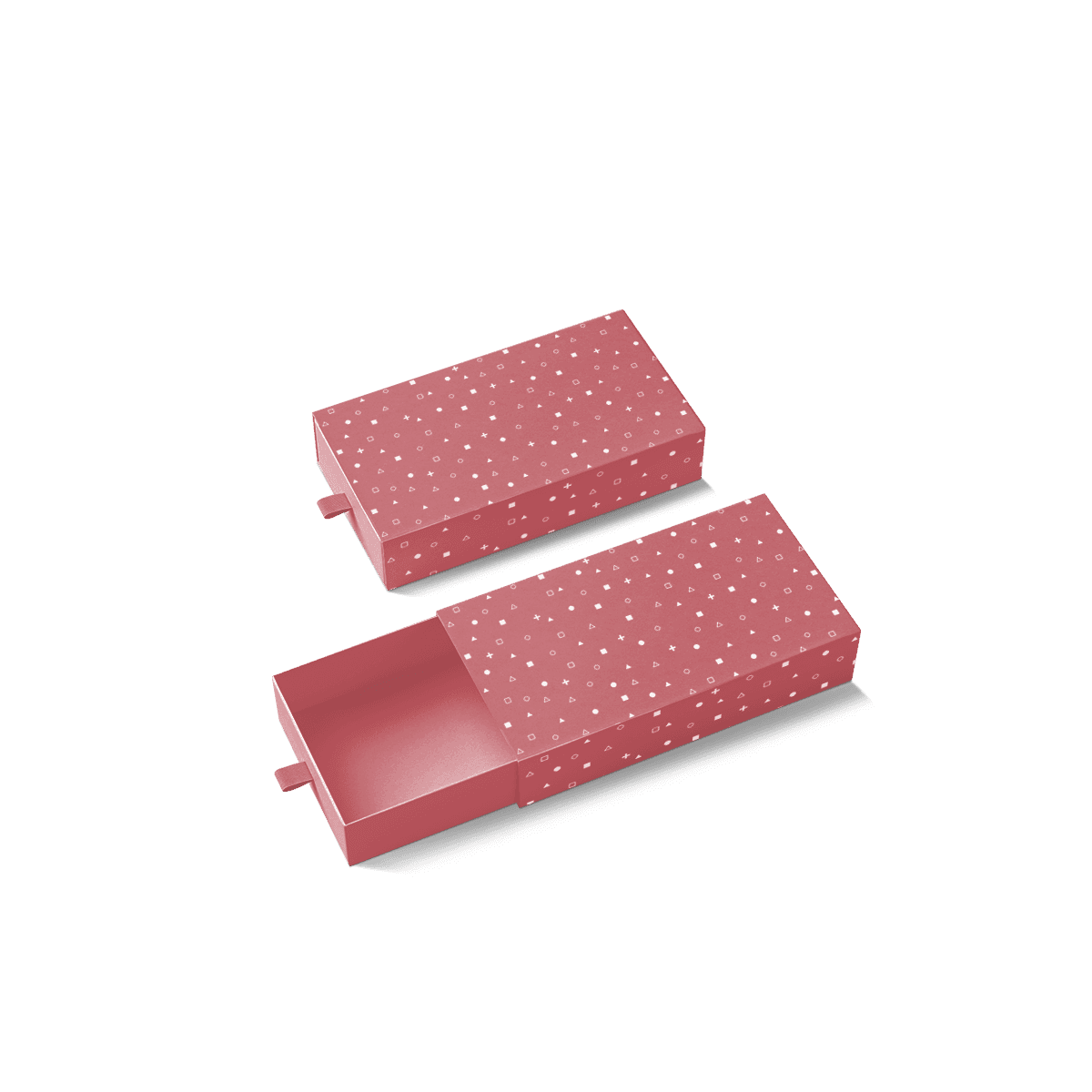
Custom Rigid Drawer Boxes
Slide-out rigid packaging with a strong outer sleeve, fitted tray and premium pull experience for jewellery, gifts, beauty and launch products.
Free Design Support
Clear Pricing
Flexible Quantities
Unlimited Customization
Premium Materials
Offset Precision
Free Shipping
Quick Turnaround
Slide-Out Packaging That Makes the Product Appear
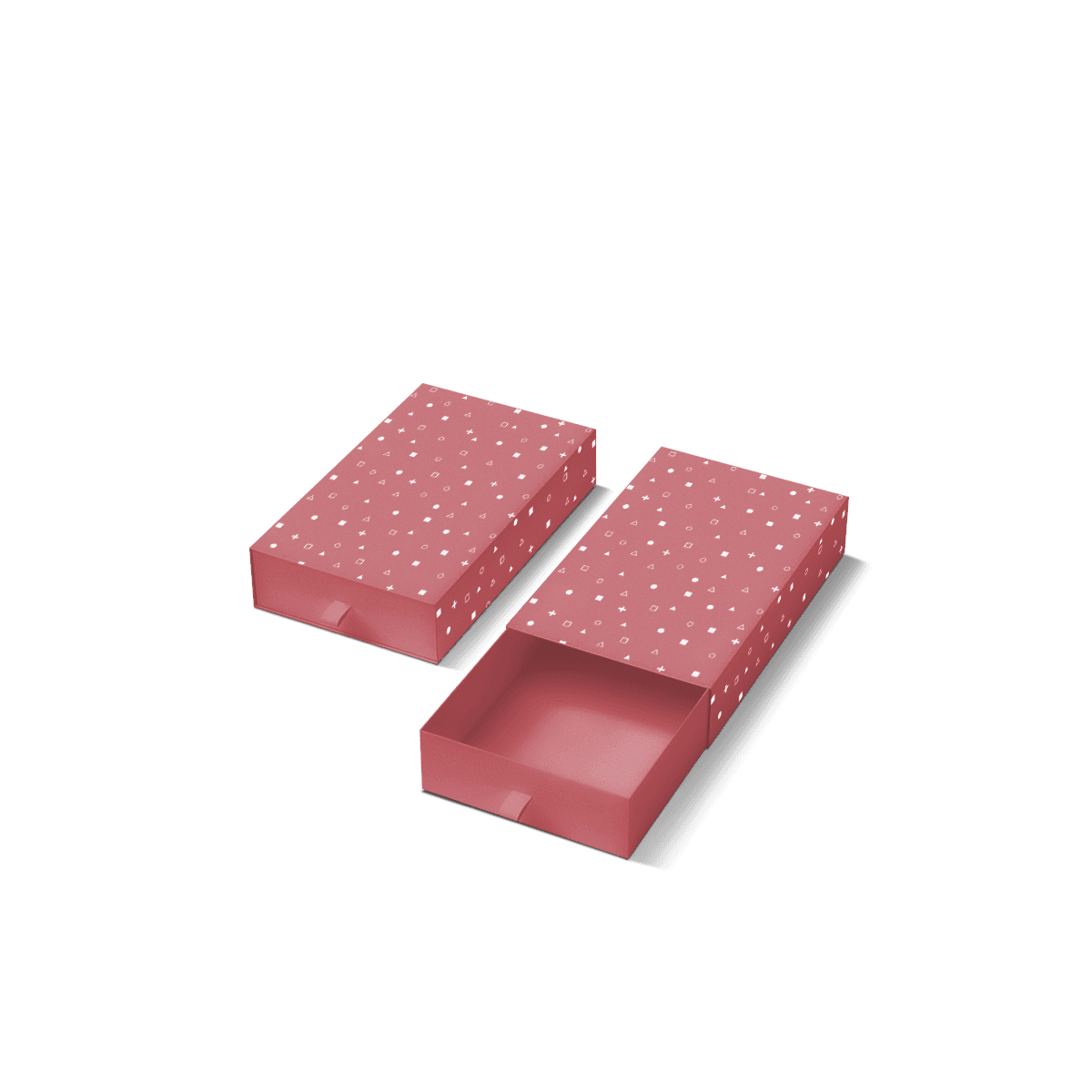
Custom Rigid Drawer Boxes use a rigid outer sleeve and a sliding inner tray to create a premium reveal. The customer pulls the tray out of the sleeve, sees the product appear gradually and interacts with the packaging before touching the item.
This structure is ideal when the opening action should feel more controlled than a lift-off lid. It suits jewellery, watches, cosmetics, fragrance sets, gift cards, candles, accessories, small electronics, PR kits and premium product launches. The outer sleeve protects the tray, while the drawer creates a more memorable unboxing movement.
The main benefit is staging. A rigid drawer box does not reveal everything at once. It lets the product slide into view, which can make small items feel more valuable and product sets feel more organised.
Rigid drawer packaging belongs within Custom Rigid Boxes when your brand needs a stronger structure, a more tactile opening and a finished box that feels worth keeping.
The sleeve controls the reveal
The sleeve is the fixed outer part of the box. It gives the structure its shape, protects the tray and creates the first branding surface customers see. The sleeve can be fully printed, wrapped in specialty paper or finished with foil, embossing or soft-touch coating.
A good sleeve should feel firm without making the drawer hard to open. If the sleeve is too tight, the tray may drag. If it is too loose, the product can feel less secure.
The tray carries the product
The inner tray holds the product, insert or product set. It must slide smoothly, stay level and support the item as the customer opens the box.
The tray should not feel flimsy. It needs the right rigid board, wrapped edges and internal depth so the product looks stable when revealed.
Drawer Travel and Sleeve Grip
The best Custom Rigid Drawer Boxes open with smooth resistance. The tray should not fall out too easily, but it should not require force. That small balance between grip and glide affects the whole customer experience.
Drawer travel means how far the tray can slide before the product is fully visible. For some products, a partial reveal feels refined. For others, the tray needs to come out far enough for easy removal. The right travel depends on product size, insert design, sleeve length and how the customer will access the item.
Unlike hinged or lid-off boxes, drawer packaging has moving friction. Board thickness, wrap material, insert weight and tray clearance all change how the drawer feels in the hand.
A snug slide feels premium
A snug slide gives the packaging a controlled feel. It is useful for jewellery, watches, perfumes, skincare sets and gift products where the reveal should feel slow and deliberate.
However, snug should not mean stuck. Customers should be able to open the box with one smooth pull.
A loose tray needs a stop plan
If the tray slides too freely, it can move during handling or feel cheap. A proper tray fit, sleeve depth and pull method can reduce that problem.
For heavier products, the tray may also need extra support so it stays aligned when opened.
Ribbon Pulls, Thumb Notches and Access
Custom Rigid Drawer Boxes usually need a pull feature so the customer can open the tray easily. The most common options are a ribbon pull, thumb notch or exposed tray edge.
A ribbon pull gives a gift-like feel and works well for beauty, jewellery, wellness and corporate gift packaging. A thumb notch is cleaner and more practical for retail boxes that need a subtle opening point. An exposed tray edge can work when the design is minimal and the tray colour forms part of the visual style.
The pull feature should match the product and the packing process. A delicate ribbon may look premium, but it must be fixed securely. A notch may feel simple, but it needs the right size so fingers can access the tray comfortably.
Ribbon pulls create a softer opening
A ribbon pull adds a small tactile moment before the drawer slides out. It can also carry brand colour, contrast or a premium finish.
Ribbon placement matters. If it sits too low, the pull may twist. If it sits too close to the edge, it may wear faster. A clean pull should feel natural from the first use.
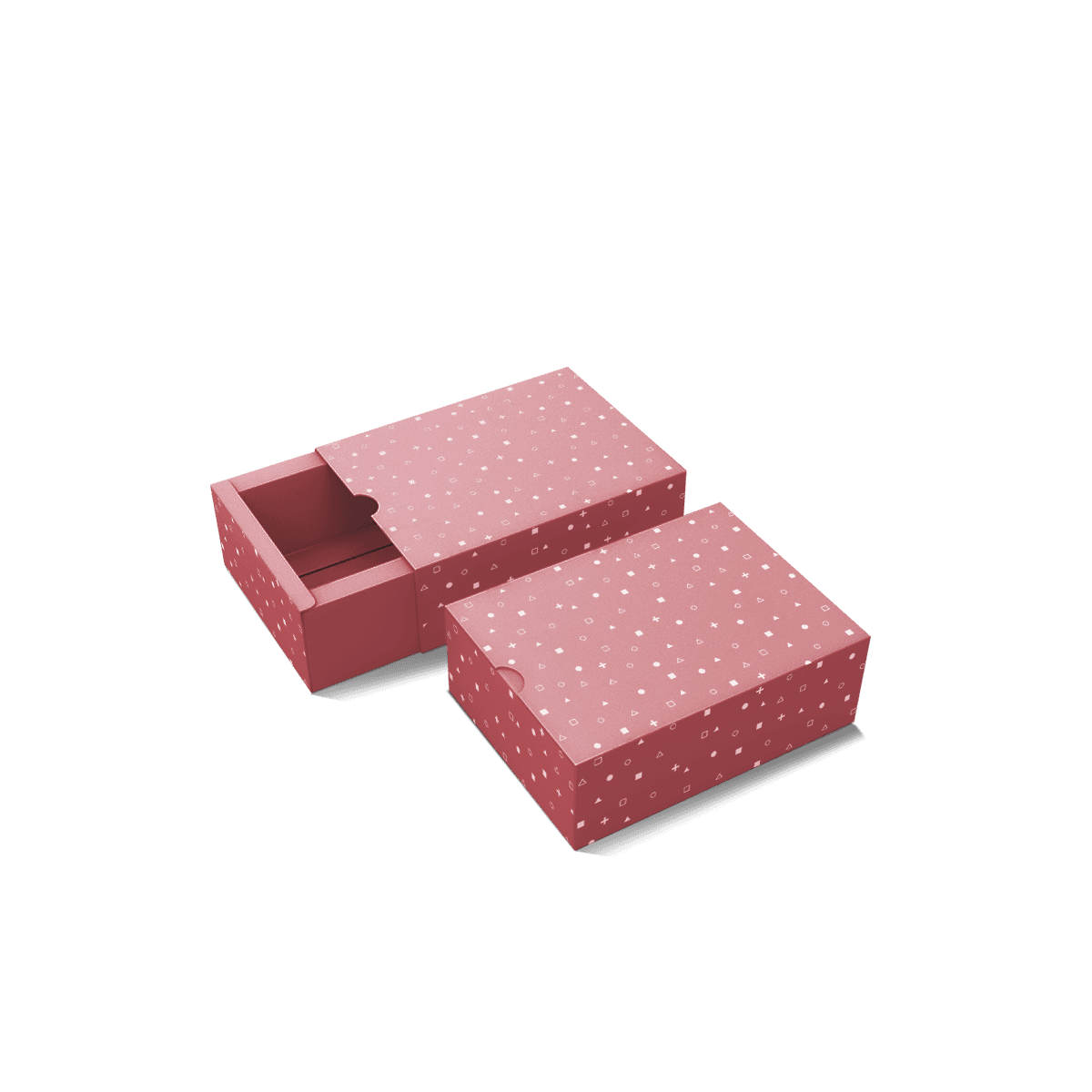
Thumb notches keep the profile clean
A thumb notch avoids extra material and keeps the box shape tidy. It works well for gift cards, jewellery, small tech accessories and compact product boxes.
The notch should be deep enough to use but not so large that it weakens the sleeve or makes the front look unfinished.
Inserts That Slide With the Tray
Inserts inside Custom Rigid Drawer Boxes must move with the tray and keep the product steady during the slide. This is different from a lid and base box where the product stays still until the lid is lifted.
The insert has to support both presentation and movement. It should hold the item firmly enough to stop rattling, but not so tightly that the customer struggles to remove the product. For small products, finger access is especially important.
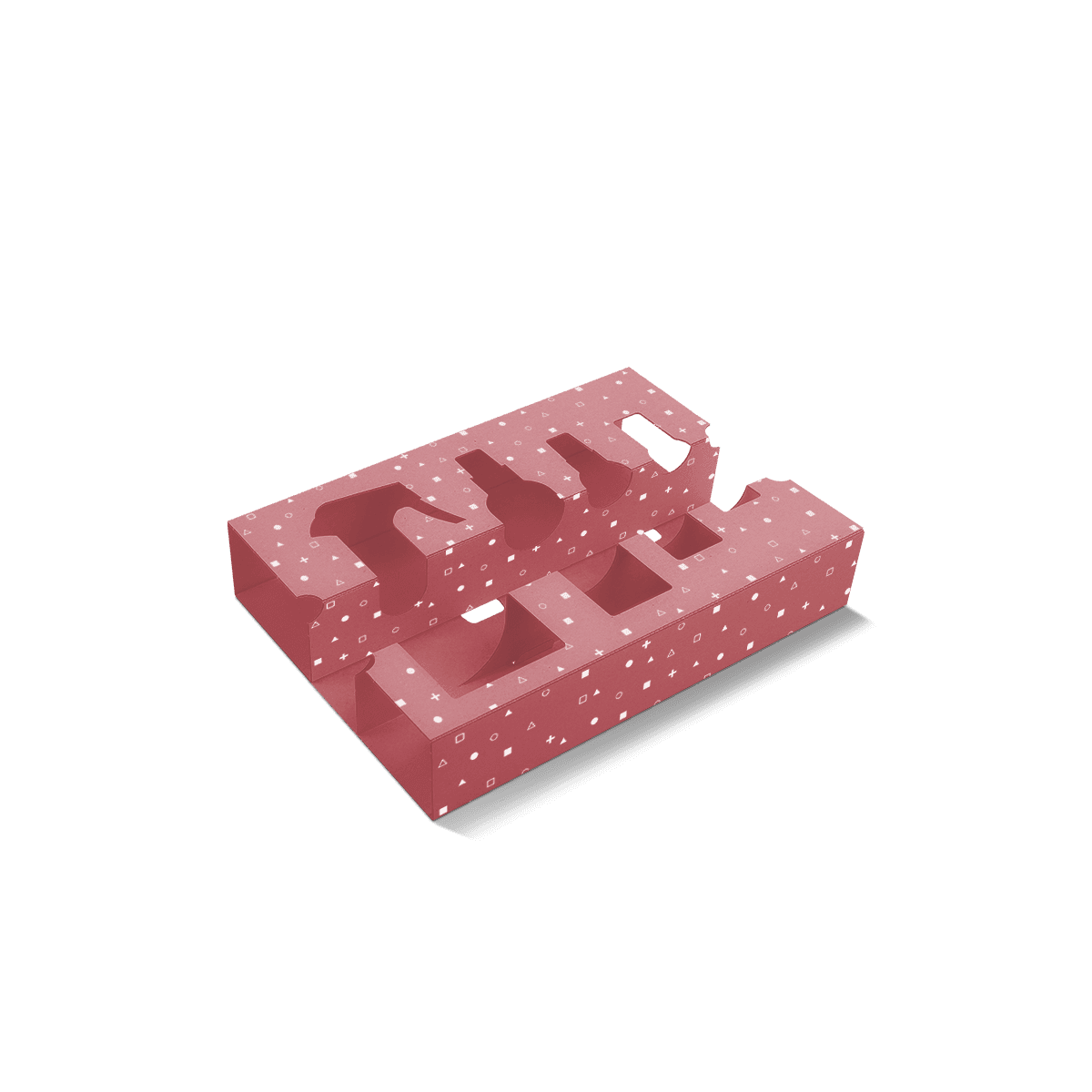
Paperboard inserts, cardboard cradles, divider layouts and layered trays can all be used depending on the product. The insert should be planned with the drawer depth, pull direction and product weight.
Product movement changes the insert
A drawer box puts the product through a small sliding action each time it opens. If the product is heavy, fragile or rounded, the insert needs stronger support.
Jewellery, fragrance bottles, candles, jars and electronics accessories may need a shaped cradle or divider. Gift sets may need multiple compartments with balanced spacing so the tray does not feel overloaded on one side.
Finger access needs room
A product that looks secure but is hard to remove can frustrate customers. Finger cut-outs, raised platforms or small gaps can help the customer lift the product cleanly.
For small jewellery and accessories, these access points should be tested before production because a few millimetres can change the user experience.
Jewellery, Gifts and Compact Premium Products
Custom Rigid Drawer Boxes are especially useful for products that need a compact, high-value reveal. Jewellery, watches, gift cards, cosmetics, fragrance samples, tech accessories and curated mini kits all suit this structure.
The sliding tray makes the product feel discovered rather than simply opened. That matters for products where emotion, gifting and perceived value drive the buying decision.
For Custom Jewellery and Accessories Packaging, drawer boxes can hold rings, bracelets, necklaces, earrings, sunglasses and watch accessories in a neat tray-style layout. The outer sleeve gives the brand a strong logo surface, while the inner tray frames the item at the moment of reveal.
Small products feel more substantial
Small products can feel underwhelming in a large box. A rigid drawer box solves this by giving the item a structured stage and a controlled opening.
The tray can be designed to fit the product closely, while the sleeve adds strength and brand presence.
Gift sets stay organised
Drawer boxes work well for sets because each item can have its own place in the tray. This helps customers understand the set quickly and keeps the pack looking deliberate.
For product launch kits, the tray can reveal items in a planned order, with the most important product placed first in the visual line.
Board, Wrap and Tray Strength
Custom Rigid Drawer Boxes need strong board because the structure moves. The tray must handle pulling, pushing, product weight and repeated opening. The sleeve must keep its shape so the drawer continues to slide cleanly.
Rigid board gives the box its firmness. The wrap creates the finished surface. Both parts matter because drawer boxes have visible edges, moving surfaces and friction points.
A thin or weak tray can bow when pulled. A sleeve that is too soft can lose shape and make the drawer feel uneven. A poor wrap can scuff along the sliding edge. These risks are why material selection should be based on product weight, use case and opening feel.
Tray edges need clean finishing
The front tray edge is often handled the most. It may carry the ribbon, thumb notch or colour contrast. This edge should be wrapped neatly and strong enough to handle repeated use.
If the tray front is a key brand detail, its finish should be checked carefully during sampling.
Sleeve corners carry the structure
The sleeve corners help keep the drawer aligned. If they are weak or poorly finished, the tray may not slide smoothly over time.
For premium retail and gifting, sharp sleeve edges and clean wrap lines make the whole box feel more expensive.
Print Surfaces on the Sleeve and Tray
Custom Rigid Drawer Boxes give you more than one branding surface. The sleeve creates the first impression. The tray front becomes the interaction point. The inside tray can carry colour, pattern or a message that appears as the product slides out.
The strongest drawer box designs use these surfaces in sequence. The sleeve attracts attention, the pull feature invites action and the tray reveals the product with a second branded moment.
Premium offset printing helps keep colours sharp across sleeve wraps and tray components. Finishes such as matte lamination, gloss lamination, foil stamping, embossing, debossing, spot UV and soft-touch coating can add depth without overcrowding the design.
The sleeve should not do everything
Because the drawer action already adds interest, the sleeve does not need to be overloaded with artwork. A clear logo, strong colour and thoughtful finish often work better than heavy graphics.
For luxury products, restraint can look more premium than a crowded layout.
The tray front can carry contrast
The tray front is visible when the drawer is closed or partly opened, depending on the structure. A contrast tray front can help the customer understand where to pull.
This area can use a different colour, foil mark, small icon or ribbon detail to create a clear opening cue.
Sampling the Slide Before Production
A sample is important for Custom Rigid Drawer Boxes because the sliding action cannot be judged properly from a flat dieline or digital mockup. The sample shows how the tray moves, how the pull feels and how the product sits during opening.
Custom Packly offers a free sample before full production, which is especially useful for rigid drawer packaging with inserts, ribbons or heavier products. Sampling helps catch issues such as tray drag, loose movement, product shifting or poor finger access before a larger run begins.
The sample should be tested like a real customer would use it. Open it slowly, pull it quickly, lift the product, close it again and check whether the tray stays aligned.
What to test on the drawer
Check the sleeve grip, tray travel, pull strength, tray level, insert hold and product access. Also check whether the tray slides smoothly after the product has been added.
If the box includes a ribbon, tug it several times. If it includes a notch, test whether the opening is comfortable for different hand sizes.
When to adjust the structure
A drawer may need a small adjustment if the product is heavy, the insert is too tight or the sleeve wrap creates too much friction. These changes can be minor, but they make a large difference in the final customer experience.
Sampling gives the team room to refine the slide before production.
First Runs, Large Runs and Storage Planning
Custom Rigid Drawer Boxes can work for small premium launches and larger repeat programs. MOQ starts from 50, which gives brands a practical way to test a gift box, retail range or launch kit before moving into larger volumes.
As demand grows, the same structure can scale into thousands, tens of thousands or larger repeat runs. For repeat production, the important details are drawer fit, artwork consistency, insert dimensions and packing speed.
Rigid drawer boxes are formed packaging, so they take more storage space than flat cartons. That does not make them unsuitable for growth. It simply means storage, reorder timing and fulfilment flow should be planned early.
Small runs help test the pull experience
A first run should confirm more than the look. It should test how the tray opens, how the product presents and how staff pack each unit.
This is useful for jewellery drops, beauty kits, limited-edition gifts, launch packs and corporate product sets.
Repeat runs need stable specifications
Once the drawer slide works, repeat orders should keep the same structural details. Changing board, wrap material, ribbon width or insert depth can change the opening feel.
Repeat-order discounts and bulk storage solutions can help growing brands keep premium drawer packaging consistent without overordering.
Drawer Boxes Compared With Other Rigid Styles
Custom Rigid Drawer Boxes are best when the pull-out reveal is part of the product experience. If the customer should open the pack like a book, a hinged lid may be better. If the customer should lift a lid away, a two-piece structure may be better. If storage space matters more than formed-box presentation, a foldable rigid style may be worth considering.
Custom Collapsible Rigid Boxes can reduce storage volume when brands need a premium look but also need more efficient warehousing. Custom Foldable Rigid Boxes can suit gift and presentation packaging where assembly speed and storage are important.
Drawer boxes remain the stronger choice when the product should slide into view and the customer should feel a clear pull action.
Choose drawer when movement matters
Drawer packaging is ideal when the reveal should feel interactive. The customer takes an action, the product appears gradually and the tray becomes part of the experience.
That makes the structure useful for premium launches, keepsake products and items with gifting value.
Choose another style for faster opening
If the customer needs faster access or the product is large and heavy, another rigid style may perform better. The best choice depends on product weight, packing speed, storage space and the opening moment your brand wants.
Quote Details for a Smooth Drawer Build
A clear quote request for Custom Rigid Drawer Boxes should explain the product, tray movement and access method. The structure depends on more than outside dimensions, so small details can prevent production problems.
Send the product size, weight, quantity, pull preference, insert needs and finish ideas. Mention whether the box should use a ribbon, thumb notch or exposed tray edge. Also explain whether the box is for retail display, gifting, ecommerce delivery, PR kits or repeat product packaging.
For the most accurate support, include photos, sketches or an existing reference if you have one. These details help the team plan sleeve clearance, tray depth, insert hold and artwork placement.
Useful quote details include:
- Product length, width, height and weight
- Number of products inside the tray
- Preferred pull style, such as ribbon or thumb notch
- Desired drawer travel and product reveal
- Insert type, tray depth and finger access needs
- Sleeve, tray front and inside print areas
- Finish preferences such as foil, embossing or soft-touch
- First order quantity and likely repeat volume
- Artwork status and required deadline
Send these details through Get a Quote so the drawer fit, print setup and production plan can be checked together.
FAQs
Related Packaging Styles


How it works
Simple steps from idea to delivery
Tell Us Your Specs
Tell Us Your Specs
Provide size, quantity, printing, and finishes.
Get a Fast Quote

Get a Fast Quote
Instant transparent pricing, no hidden fees.
Design and Approval

Design and Approval
Artwork checks, revisions, and final sign-off.
Produce

Produce
Expert manufacturing to meet deadlines.
Ship to Your Door

Ship to Your Door
Hassle-free, flexible delivery options.
Start Your Custom Packaging Quote
Share your product details, dimensions, quantity and artwork needs. We’ll help choose the right packaging style and send a clear quote.