Custom Paper Bags
Printed paper bags for retail, takeaway, events and gifting, built around handle choice, carry comfort, material feel and brand visibility.
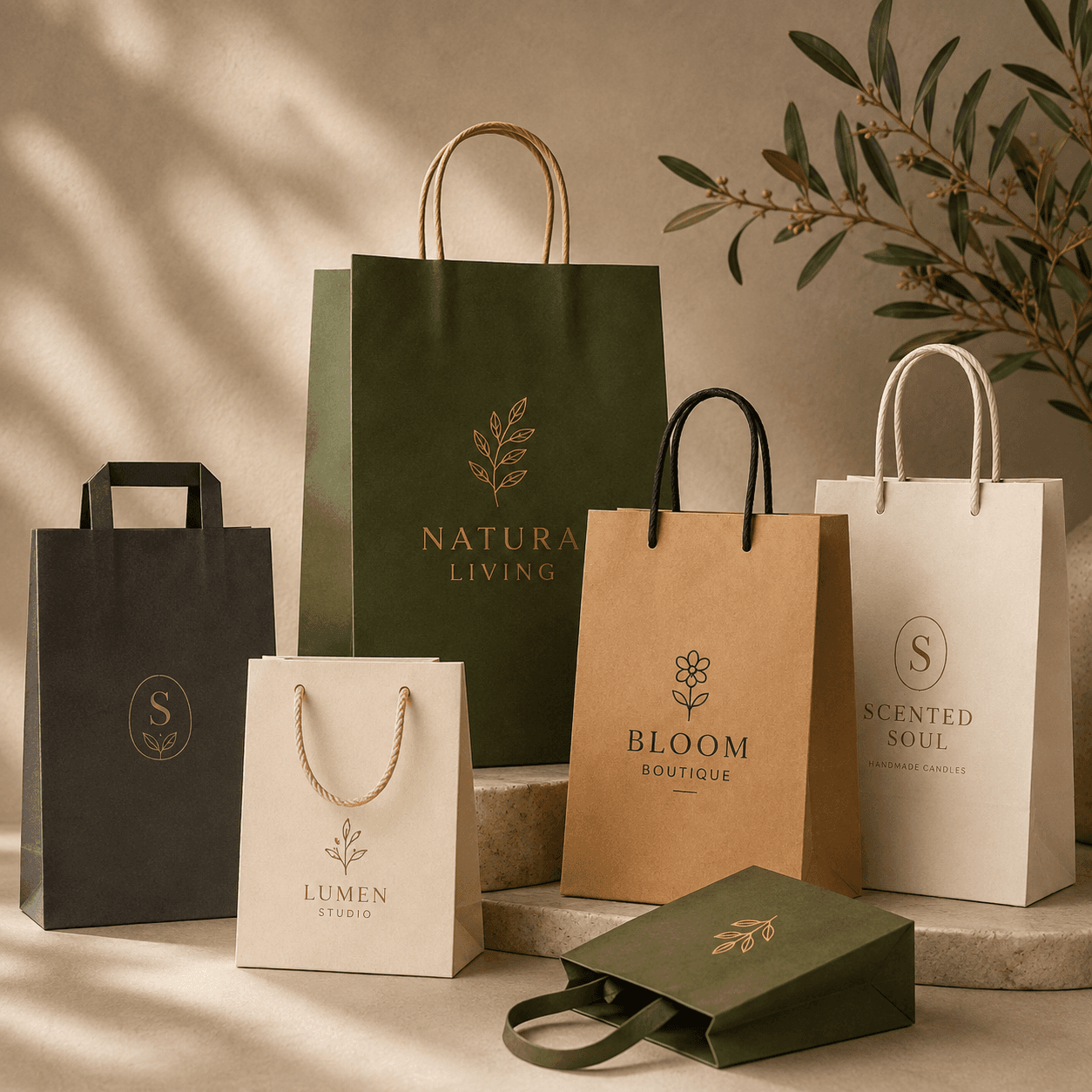
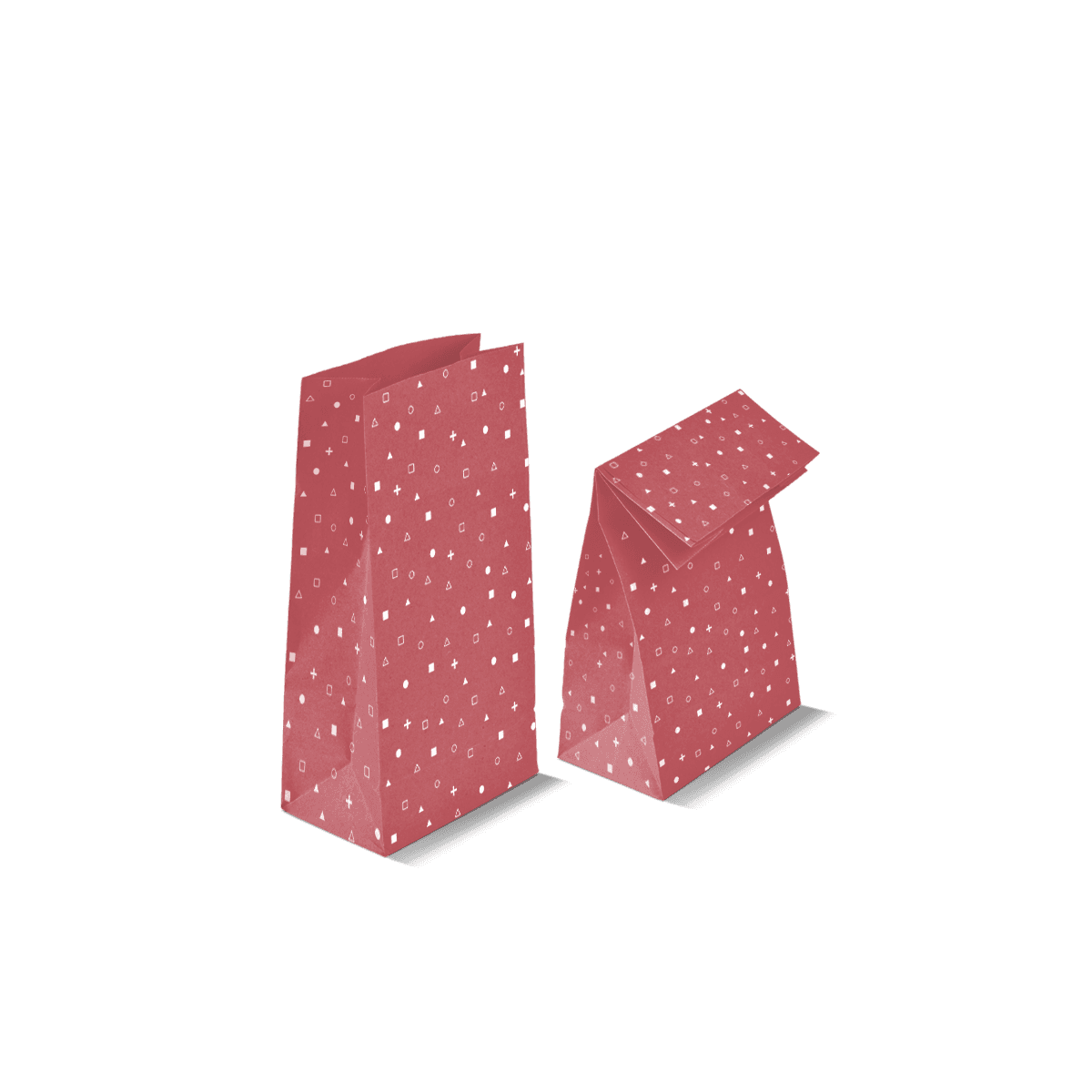
Custom Takeaway Paper Bags
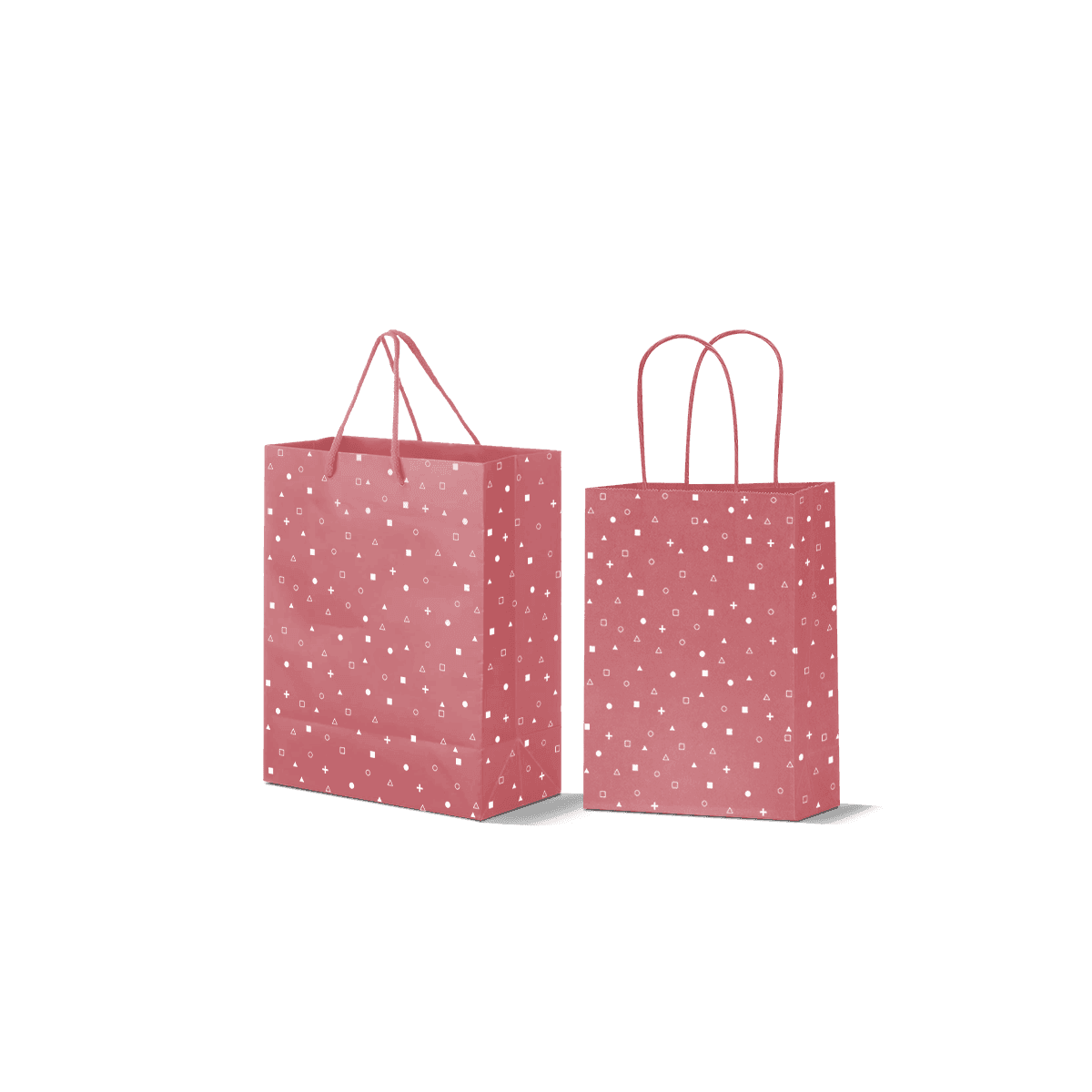
Custom Paper Shopping Bags
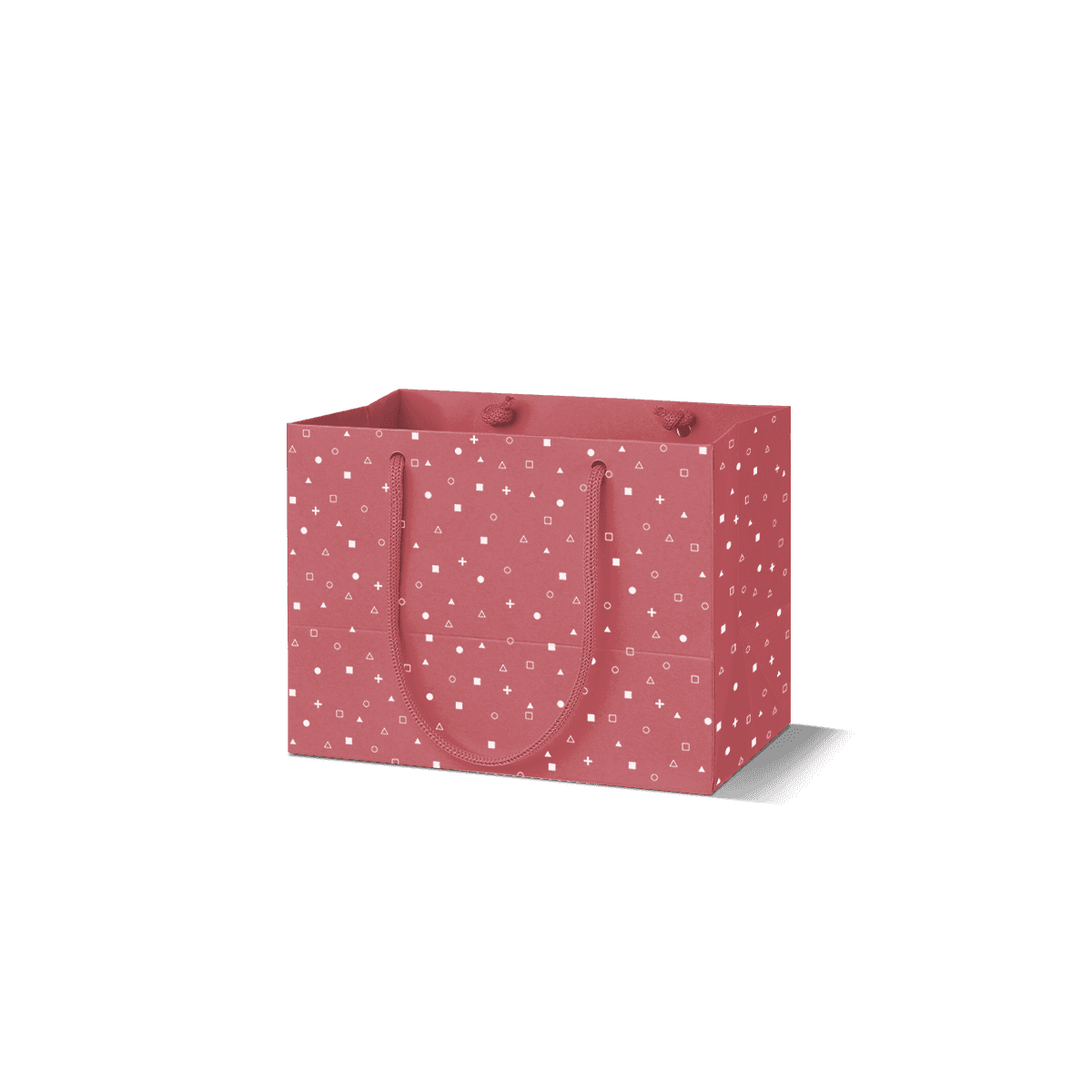
Custom Rope Handle Paper Bags
Custom Retail Paper Bags
Custom Die Cut Handle Paper Bags
Custom Branded Paper Bags
Custom Kraft Paper Bags
Custom Flat Bottom Paper Bags
Custom Printed Paper Bags
Custom Pinch Bottom Paper Bags
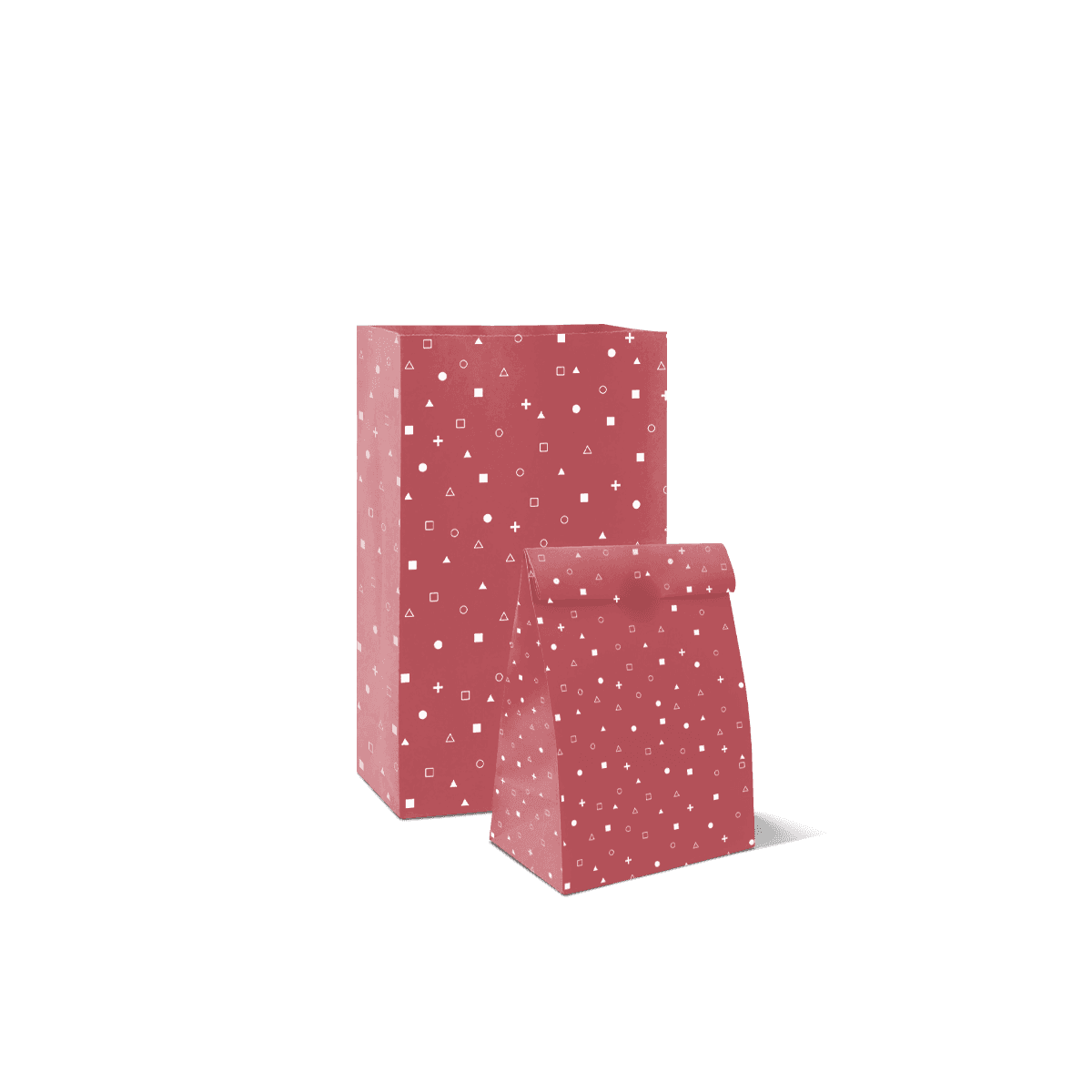
Custom SOS Paper Bags
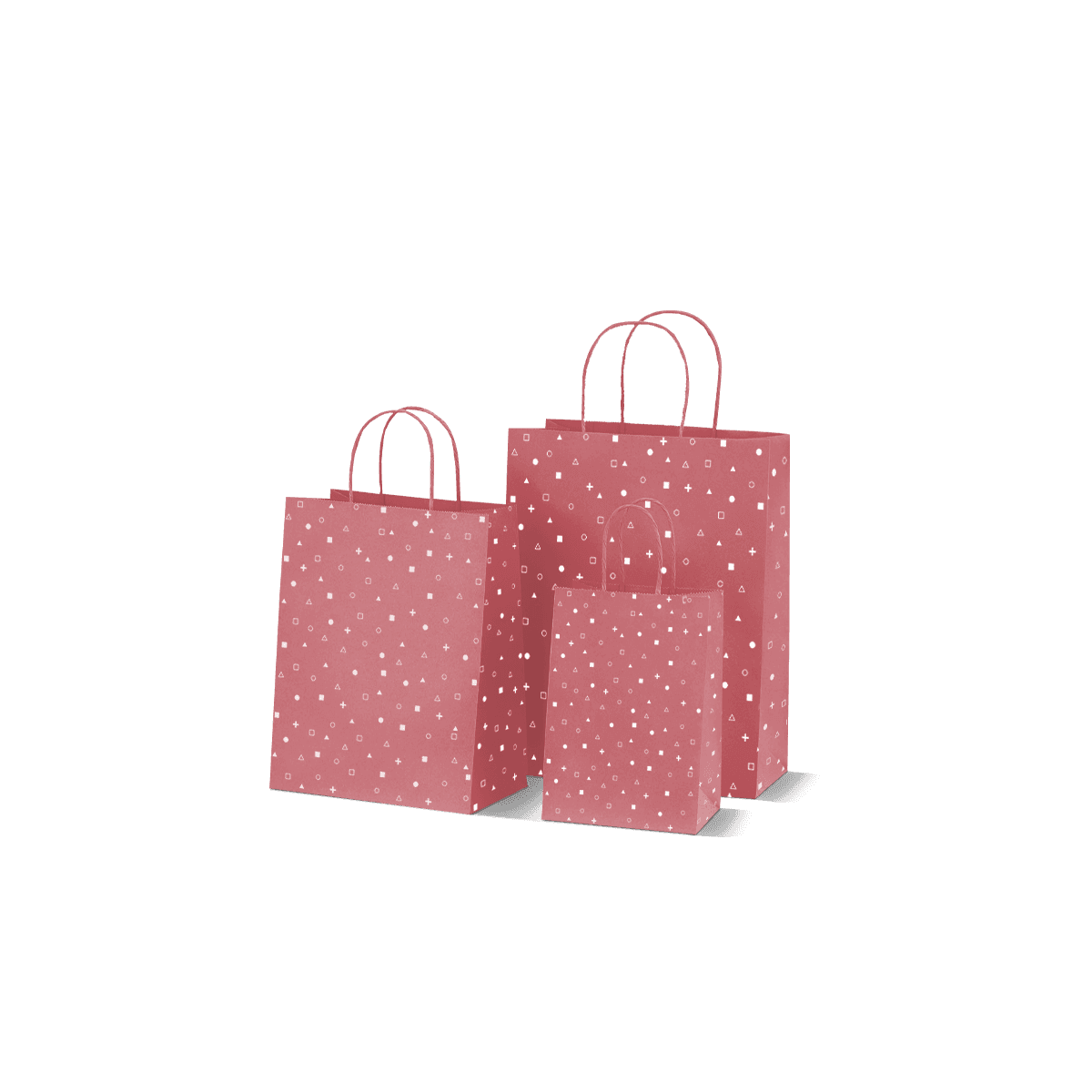
Custom Twisted Handle Paper Bags
Bags Customers Carry, Keep and Notice
Custom Paper Bags help customers carry your product while keeping your brand visible after the sale, pickup or event handover.
A good bag is not only a printed outer. It needs to suit the product weight, open easily at the counter, feel comfortable in the hand and present your logo clearly while the customer carries it. The wrong bag can crease, sag, hide the artwork or feel weaker than the product deserves.
Custom Packly helps brands create Custom Paper Bags for retail stores, cafes, bakeries, markets, product launches, gift sets, events and takeaway orders. You can start from MOQ 50 for a first run, then scale into larger repeat orders, store rollouts or high-volume bag programs once the size, handle and artwork are approved.
Paper bags also work well inside a wider custom packaging range. A product may sit inside a folding carton, rigid box, pouch or sleeve first, while the paper bag completes the customer handover.
Choose the Bag Around the Carry Moment
Custom Paper Bags should be chosen around how the customer will hold, move and remember the product.
A boutique gift bag needs a different structure from a bakery takeaway bag. An event sample bag needs a different opening and handle from a luxury shopping bag. The right choice depends on product size, weight, handle style, base depth, print surface and packing speed.
Rope handles for premium handover
Rope handle paper bags suit products where the carry feel matters. They work well for fashion, beauty, jewellery, gift sets, corporate packs and retail products that need a more polished presentation.
The rope handle adds texture and a stronger sense of value. It also suits bags with premium finishes such as foil, embossing, matte lamination or clean centred branding.
Twisted handles for everyday retail use
Twisted handle paper bags are practical, familiar and suitable for many retail environments. They are useful for boutiques, gift shops, apparel, wellness products, accessories, books and lightweight boxed goods.
This style usually gives a good balance between strength, cost and presentation. It works well when staff need to pack quickly but the bag still needs to feel branded.
Flat handles for takeaway and light products
Flat handle paper bags suit lighter items, takeaway orders, small retail goods and day-to-day service counters. They are easy to stack, easy to use and often suit faster packing environments.
For cafes, bakeries and food service brands, flat handle bags can carry boxed or wrapped products neatly when the inner packaging has already handled direct product protection.
Die cut handles for a clean front panel
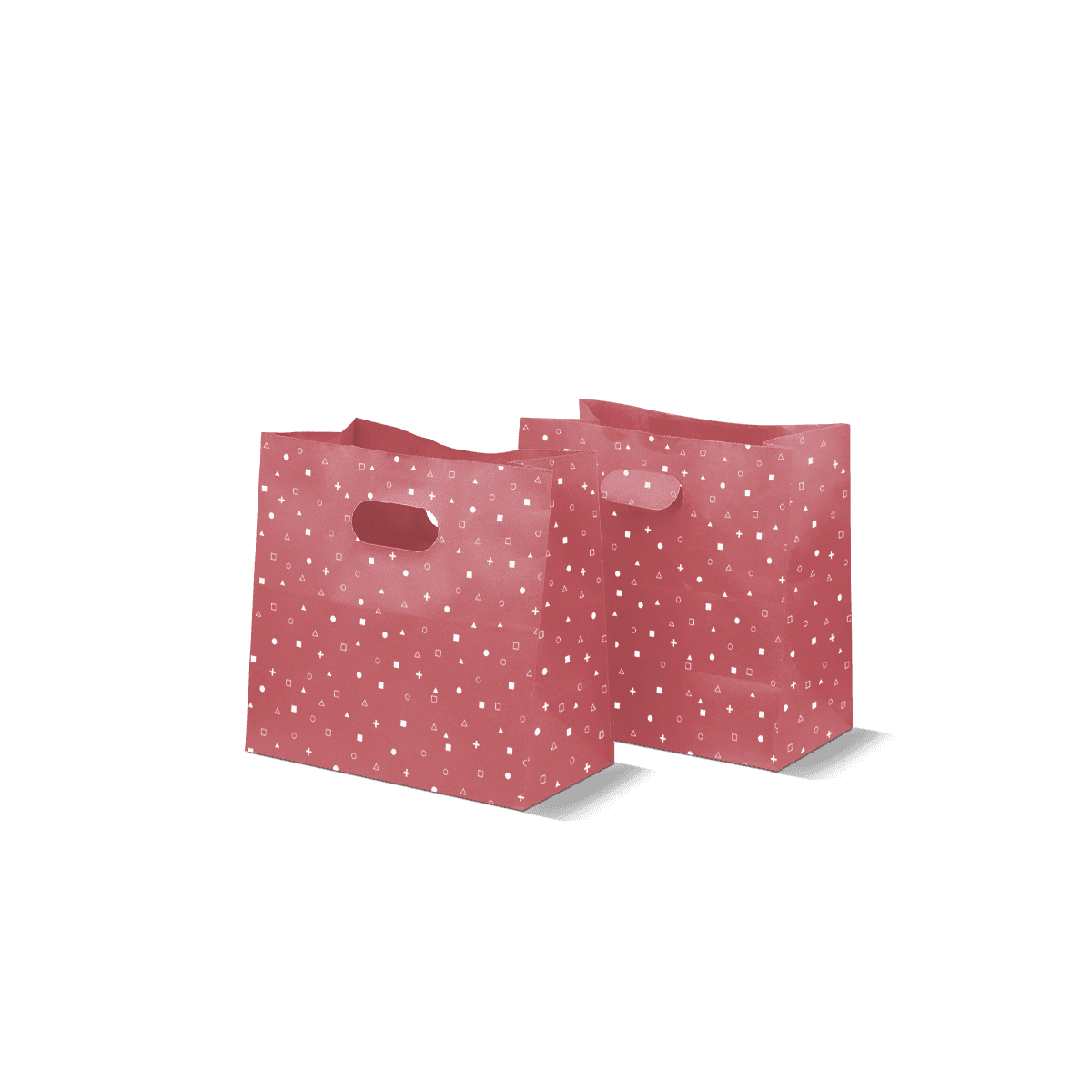
Die cut handle paper bags are useful when you want a neat bag shape without attached handles. The cut-out handle keeps the surface clean and gives the bag a simple branded look.
This style suits event handouts, samples, brochures, small gifts, lightweight retail items and promotional products. The handle cut-out needs the right board strength so it does not tear during use.
Flat bottom and SOS bags for upright packing
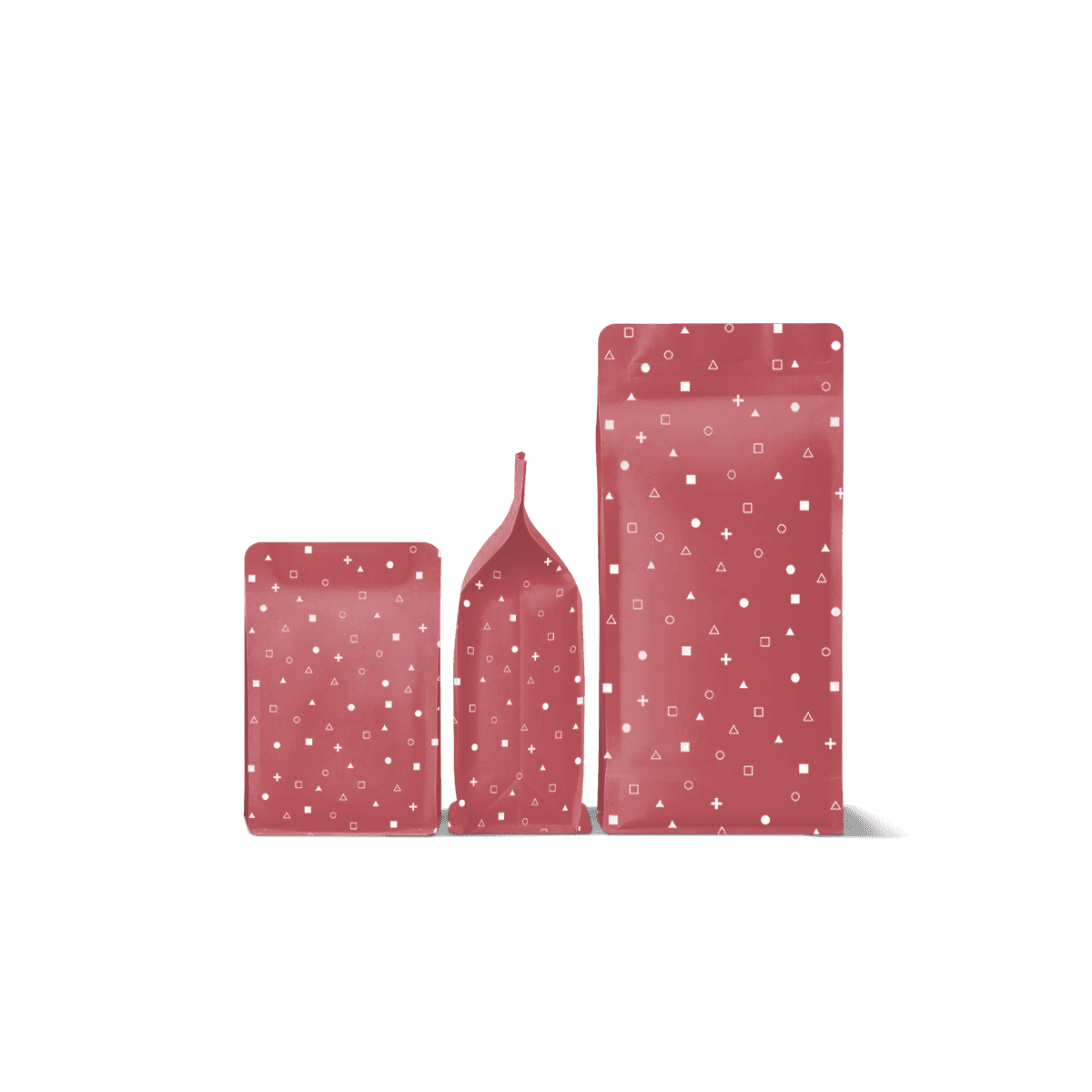
Flat bottom and SOS paper bags suit products that need to stand upright. They work well for bakery orders, packaged food, market products, retail sets, cafe items and small product bundles.
The base depth and side gusset matter here. A shallow base may not hold wider products neatly. A deeper base can improve standing stability but needs to match the product width.
Material Choices That Change the Feel of the Bag
The material affects how the bag feels, prints, stands, folds and carries weight.
Paper thickness, kraft texture, white paper brightness, recycled content and coating all affect the final result. The best choice depends on the product, the brand style and whether the bag needs to look natural, premium, bright, minimal or practical.
Kraft paper for natural brand presentation
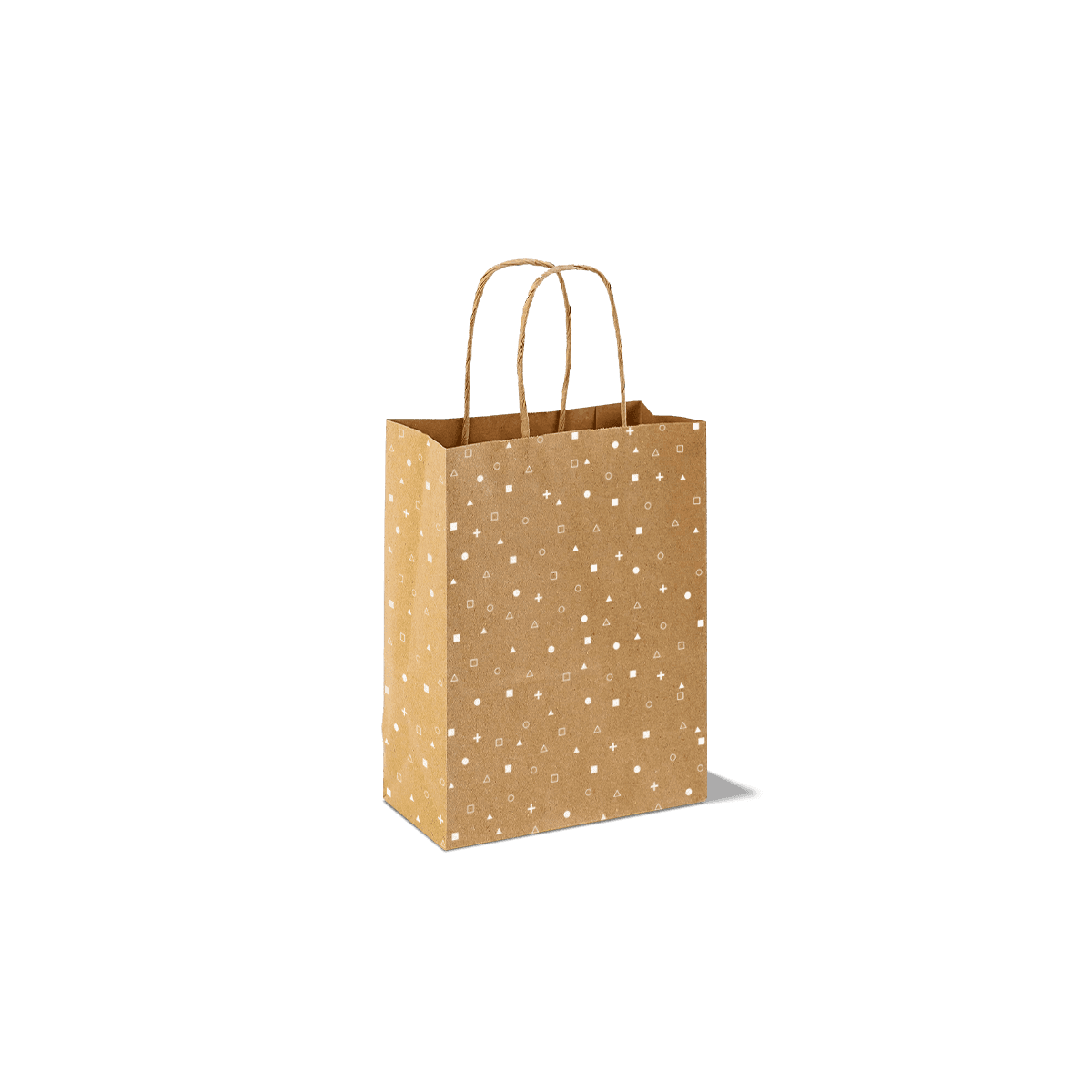
Kraft paper bags are popular for brands that want a natural, simple or eco-conscious look. They suit cafes, bakeries, wellness brands, handmade products, market stalls, organic-style products and casual retail.
Artwork should be designed for the kraft background. Darker print, simple logos and strong contrast usually work best. Pale colours, fine lines and soft tones can lose impact on brown kraft paper.
White paper for sharper colour and cleaner detail
White paper bags are better when colour accuracy, fine detail and bright branding matter. They suit beauty, fashion, gifting, events, corporate handover and retail products with a clean visual identity.
White paper gives logos, product names and colour blocks more contrast. It also supports full colour printing more clearly than kraft when your artwork uses bright or detailed design.
Recycled and eco-friendly paper options
Eco-friendly options are useful when the bag needs to support a more responsible packaging range. Recycled paper, kraft stock and paper-based materials can help reduce reliance on plastic-style carry packaging.
The material still needs to match the load. A bag that tears or collapses creates a worse customer experience and more waste. The goal is to choose a paper bag that is responsible, practical and strong enough for the product.
When coating or lamination makes sense
Some bags need a cleaner finish, more scuff resistance or a premium surface. Matte and gloss finishes can change the look and feel of the paper. Foil, embossing or spot UV can add focus to a logo or campaign design.
Coating should suit the use case. A luxury gift bag may benefit from a soft matte feel. A takeaway bag may need a simpler surface that stays practical and cost-effective.
Print Placement That Stays Visible in Real Use
Paper bag artwork should be planned for movement, grip and folds, not only a flat front view.
Customers carry bags by the handle. Staff may fold the top. Products can push the panels outward. Handles, gussets and base folds can interrupt artwork if the design is not placed correctly. That is why logo position, print area and safe zones matter before production.
Front panel branding
The front panel should carry the main brand message. A centred logo with enough blank space often works better than crowded artwork, especially for retail and boutique bags.
If the bag is used at events or markets, the logo may need to be larger so it remains visible from a distance. If it is used for premium retail, a smaller logo with stronger finish detail may feel more refined.
Side gusset printing
Side gussets can carry website URLs, short messages, brand marks or pattern elements. However, the side panel folds and moves more than the front, so detailed text should be used carefully.
For bold branding, a repeated logo pattern or colour block can work well. For practical messaging, keep the wording short and easy to read.
Inside print and finishing details
Inside print is less common on simple paper bags but can add surprise for gift, event or premium retail use. It may suit launch campaigns, VIP gifting or brand moments where the bag supports a full unboxing experience.
Premium offset printing helps sharpen artwork, but the final result still depends on the material, print coverage, colour selection and file setup. Custom Packly can review artwork before production so print areas, folds and handles are considered early.
Sizing, Gussets and Base Depth Need More Attention Than Most Buyers Expect
A paper bag should be sized around the packed product, not just the product itself.
A candle in a box, a folded shirt with tissue, a bakery item in a tray and a corporate gift set all need different space inside the bag. If the bag is too tight, staff struggle to pack it. If it is too large, the product moves, tips or looks less valuable.
Measure the product after inner packaging
Measure the product after it is boxed, wrapped, sleeved or bundled. Inner packaging changes the width, height and thickness.
For retail products, allow space for tissue, tags, care cards or small inserts. For takeaway and bakery products, allow space for the inner box, wrap or food tray. For events, measure the full set of items that will go into each bag.
Match the gusset to product shape
The gusset decides how the bag opens and expands. A wider gusset helps boxed goods, bakery packs, folded apparel and gift sets sit more neatly. A narrow gusset suits brochures, flat products, accessories and small samples.
A strong base helps products stand upright. It also makes the bag feel more stable when the customer places it on a counter, car seat or table.
Check handle comfort before a large order
Handle comfort matters when the bag carries heavier or bulkier products. Rope handles often feel better for premium or heavier retail goods. Twisted handles are practical for everyday shopping. Die cut handles can look clean but need the right paper strength.
A free sample before full production can help confirm the bag’s size, handle feel, material and print scale before you commit to a bigger order.
Where Custom Paper Bags Work Best
Custom Paper Bags are most effective when the product already has the right inner protection and the bag completes the handover.
Paper bags are not always the main protective layer. In many cases, they are the branded carry layer. The box, pouch, sleeve or wrap protects the product, while the bag makes the final customer experience feel complete.
Retail and apparel stores
Retail brands use Custom Paper Bags to make a purchase feel finished. The bag carries the product out of the store, but it also carries the brand into public view.
For Custom Retail and Apparel Packaging, paper bags can work with tissue paper, garment boxes, jewellery boxes, shoe boxes, apparel sleeves and branded product tags.
Cafes, bakeries and takeaway counters
Food service buyers need bags that are quick to open, easy to pack and suitable for the product type. A takeaway bag must work under real service pressure, not only look good on a mockup.
For direct food contact, the food-safe layer or suitable material choice needs to be confirmed. In many cases, the paper bag carries boxed, wrapped or sleeved products rather than touching food directly.
Events, markets and product launches
Event bags need visible branding and reliable carry strength. They may hold samples, brochures, merchandise, vouchers, small boxes or multiple promotional items.
Before ordering, confirm the full contents of the bag. A light brochure bag and a gift bag with products, bottles or boxes need different material strength and base support.
Gift sets and premium product handover
Gift packaging often needs a stronger carry impression. Rope handles, white paper, foil details or a thicker stock can help the bag feel more premium.
For high-value items, the bag usually works best with an inner rigid box, carton, sleeve or insert. The bag should support the unboxing experience, not do all the product protection by itself.
Printed Paper Bags for Brand Consistency
Printed paper bags help your packaging range look connected across store, delivery, event and retail use.
A customer may see your box first, then carry the bag later. If the colours, logo scale and finish feel disconnected, the packaging range can look less professional. When the bag shares the same brand system as your boxes, sleeves, labels or inserts, the whole purchase feels more deliberate.
For brands already using printed boxes, custom printed paper bags can help extend the same visual identity into the carry experience.
Simple logo bags
Simple logo bags suit brands that want a clean, flexible packaging piece across many products. They work well for retail, beauty, wellness, apparel, gifts and markets.
A simple logo can also keep the bag usable across different seasons, products and store locations.
Campaign and seasonal bags
Seasonal bags are useful for launches, holidays, events, limited drops or gifting campaigns. They can use different colours, patterns, slogans or product messages while keeping the core brand recognisable.
Short-run campaign bags can start from MOQ 50, while larger seasonal programs can be planned around repeat supply and storage.
Branded paper bags for product sets
Product sets often need a bag that fits several items neatly. This is common for gift boxes, event packs, PR kits, wellness bundles, bakery sets and corporate gifts.
The quote should include the full packed set, not only the largest item. This helps avoid a bag that looks good empty but performs poorly when packed.
Small Runs, Store Programs and Repeat Orders
Custom Paper Bags can start small and scale into larger repeat programs once the structure is proven.
MOQ starts from 50, which helps brands test size, print and handle style for launches, markets, pop-ups or first retail orders. Larger quantities can be planned for stores, events, monthly usage, franchise locations, seasonal campaigns or wholesale supply.
First runs for new brands
A first paper bag run should test how the bag performs in real handover. Check if the product slides, if the handle feels right, if the logo stays visible and if staff can pack it quickly.
This is especially important for boxed products, heavy gift sets, bakery items, apparel and event bags that carry multiple pieces.
Repeat runs for retail and takeaway teams
Repeat ordering works best when your approved size, paper stock, handle type, artwork and finish are saved clearly. That keeps future orders consistent and helps your team avoid rechecking the same details every time.
Custom Packly can support repeat-order planning, larger production runs, bulk storage needs and repeat-order discounts where relevant.
Planning different sizes across one brand
Many brands need more than one bag size. A cafe may need a small takeaway bag and a larger catering bag. A retailer may need one bag for accessories and another for apparel. An event team may need one for samples and one for VIP gifting.
A good size system prevents overusing one bag for every product. It also helps reduce wasted space and keeps the customer experience more polished.
Artwork and Dieline Checks Before Production
A paper bag dieline shows where the front panel, back panel, side gussets, base folds, handle area and safe print zones sit.
This matters because artwork can disappear into folds, sit too close to a handle or wrap awkwardly onto a gusset. A dieline gives your designer the right structure before artwork is approved.
The free dieline tool is useful when you need to prepare dimensions, understand fold areas or organise artwork before requesting production support.
What to check on the dieline
Check the handle area first. Logos, product names and key messages should not sit too close to the handle, fold or top edge.
Then check the base and side gussets. If artwork continues across the side or base, make sure it is designed for folding. Pattern artwork usually handles folds better than small text or fine product details.
Artwork details to prepare
A better quote starts with clear artwork and product details. Share the bag size, handle type, material direction, print coverage, finish ideas, quantity and deadline.
Also share whether the bag will carry one product, multiple products or a gift set. That helps the packaging team recommend the right base depth and handle style.
When to request a sample
A sample is useful when the bag has premium finishes, heavier contents, a new handle style, complex artwork placement or a high-value launch. It gives your team a chance to review the bag before full production.
For standard repeat bags, an approved dieline and print-ready file may be enough once the first order has been tested.
Paper Bags That Fit the Rest of Your Packaging
Custom Paper Bags work best when they are planned as part of a full packaging system.
A retail purchase may use a folding carton inside a paper bag. A premium gift may use a rigid box and rope handle bag. A bakery order may use a box, sleeve and carry bag. A wellness brand may use a pouch, insert and branded bag for a product set.
When the bag is part of a wider system, Customisation / Capabilities can help align material, print, finish, size and artwork choices across different packaging formats.
Pair bags with boxes
Paper bags often carry boxed products. Folding cartons, rigid boxes and product boxes provide structure and protection, while the paper bag improves handover and brand visibility.
This works well for cosmetics, candles, gifts, jewellery, apparel, bakery products and event packs.
Pair bags with sleeves and bands
Sleeves and bands can brand the inner product before it goes into the bag. This is useful for food trays, product bundles, boxed sets, soap bars, bakery packs and retail multipacks.
The bag gives the customer a polished carry experience, while the sleeve or band keeps the product itself branded.
Pair bags with pouches or wraps
Pouches, wraps and inner paper packaging can protect or present the product before it goes into the carry bag. This can suit snacks, wellness products, markets, small retail goods and takeaway items.
The key is to plan all layers together so the final packed size still fits comfortably.
FAQs
Start Your Custom Packaging Quote
Share your product details, dimensions, quantity and artwork needs. We’ll help choose the right packaging style and send a clear quote.